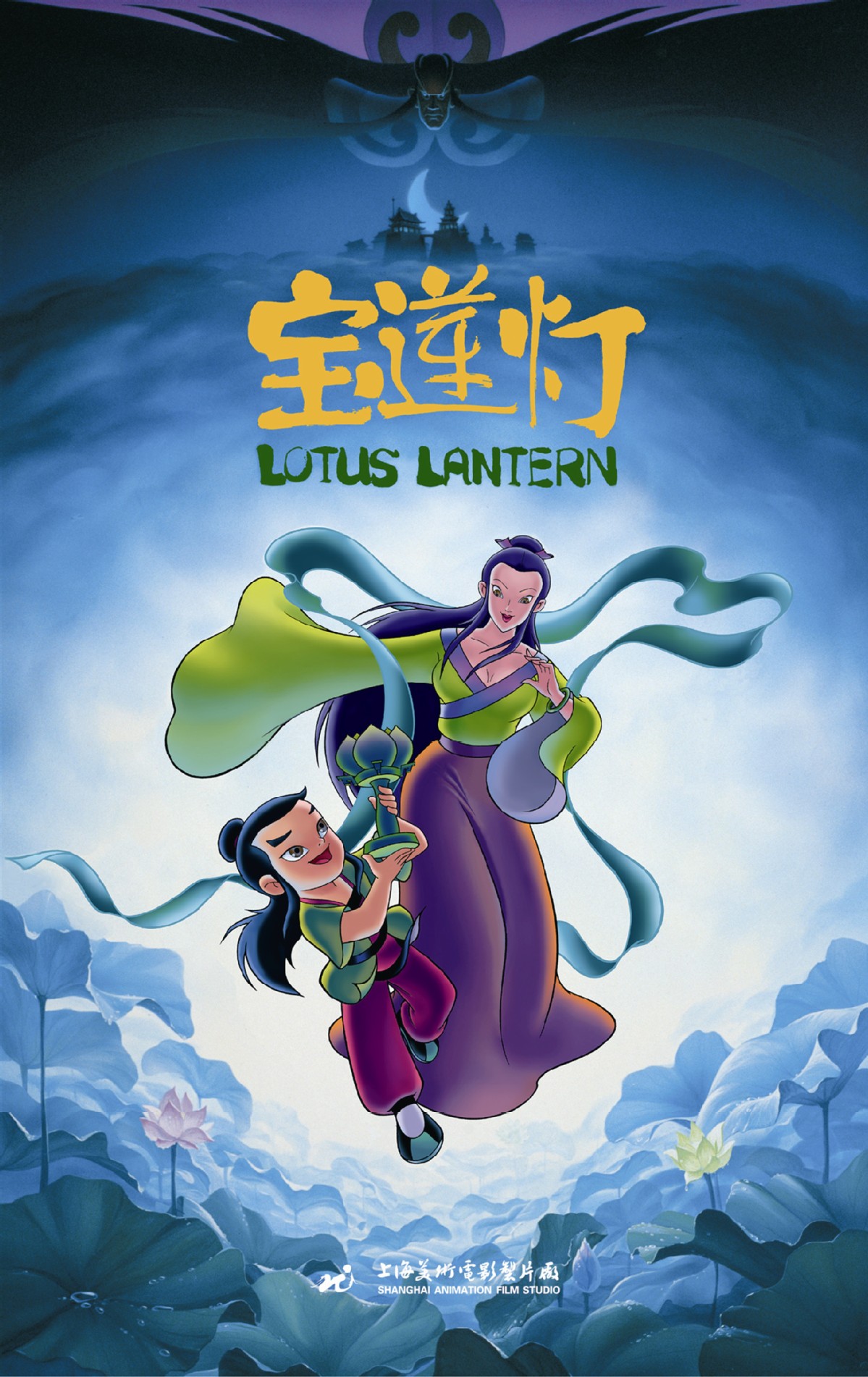
Lotus Lantern
Introduction
"Lotus Lantern" is a landmark Chinese animated feature film released in 1999, directed by Chang Guangxi and produced by the Shanghai Animation Film Studio. Recognized for its cultural significance, the film is an adaptation of the traditional Chinese fairy tale "Pi Shan Jiu Mu," which translates to "a boy cuts through hills to rescue his mother." This story is deeply rooted in Chinese mythology and folklore, focusing on themes of familial love, bravery, and perseverance.
Historical Context and Reception
The production of "Lotus Lantern" took four years to complete, involving the creation of over 150,000 animation cels and more than 2,000 painted backgrounds. Released in the late 1990s, the film came at a time when the Chinese film industry was undergoing significant transformations due to the opening-up and reform policies that had been implemented in China. This period marked an exploration phase for the industry, testing the waters with various film genres and production styles.
"Lotus Lantern" was the most popular film in China in 1999 and played a crucial role in influencing the country's animated film sector. It also marked a monumental moment in domestic animation, making a significant impact on the global stage as China's answer to Disney, showcasing the depth and vibrancy of Chinese animated storytelling.
Plot Overview
The story centers around a young boy, Chenxiang, who embarks on a perilous journey to rescue his mother from her imprisonment beneath a mountain. His mother, a celestial being, had married a mortal, which angered the gods and led to her punishment. Chenxiang, driven by filial piety, bravery, and determination, is guided by a magical lotus lantern given to him by a divine figure. The lantern becomes a symbol of hope and power, enabling him to triumph over various adversities and ultimately save his mother.
Cultural Significance
"Lotus Lantern" is not only a tale of adventure and courage but also a narrative that celebrates the rich tapestry of Chinese mythology. The film integrates traditional elements with contemporary animation techniques, creating a visually stunning experience that appeals to audiences of all ages. The success of "Lotus Lantern" is attributed to its ability to resonate with Chinese cultural values and its innovative approach to storytelling, which paved the way for future Chinese animations.
Influence and Legacy
The influence of "Lotus Lantern" extends beyond its time, contributing to a resurgence of interest in Chinese mythology and animated features. It set a precedent for big-budget animated productions in China and demonstrated the potential of local talent to produce films that could compete with international offerings. Notable for its star-studded voice cast, including Jiang Wen and Xu Fan, the film highlighted the importance of voice acting in animation, a trend that has continued in Chinese cinema.
Subsequent projects and adaptations have drawn inspiration from the successes of "Lotus Lantern," reflecting its enduring impact on the industry. The film remains a beloved classic, recognized for its artistic achievements and its role in shaping the future of Chinese animation.








